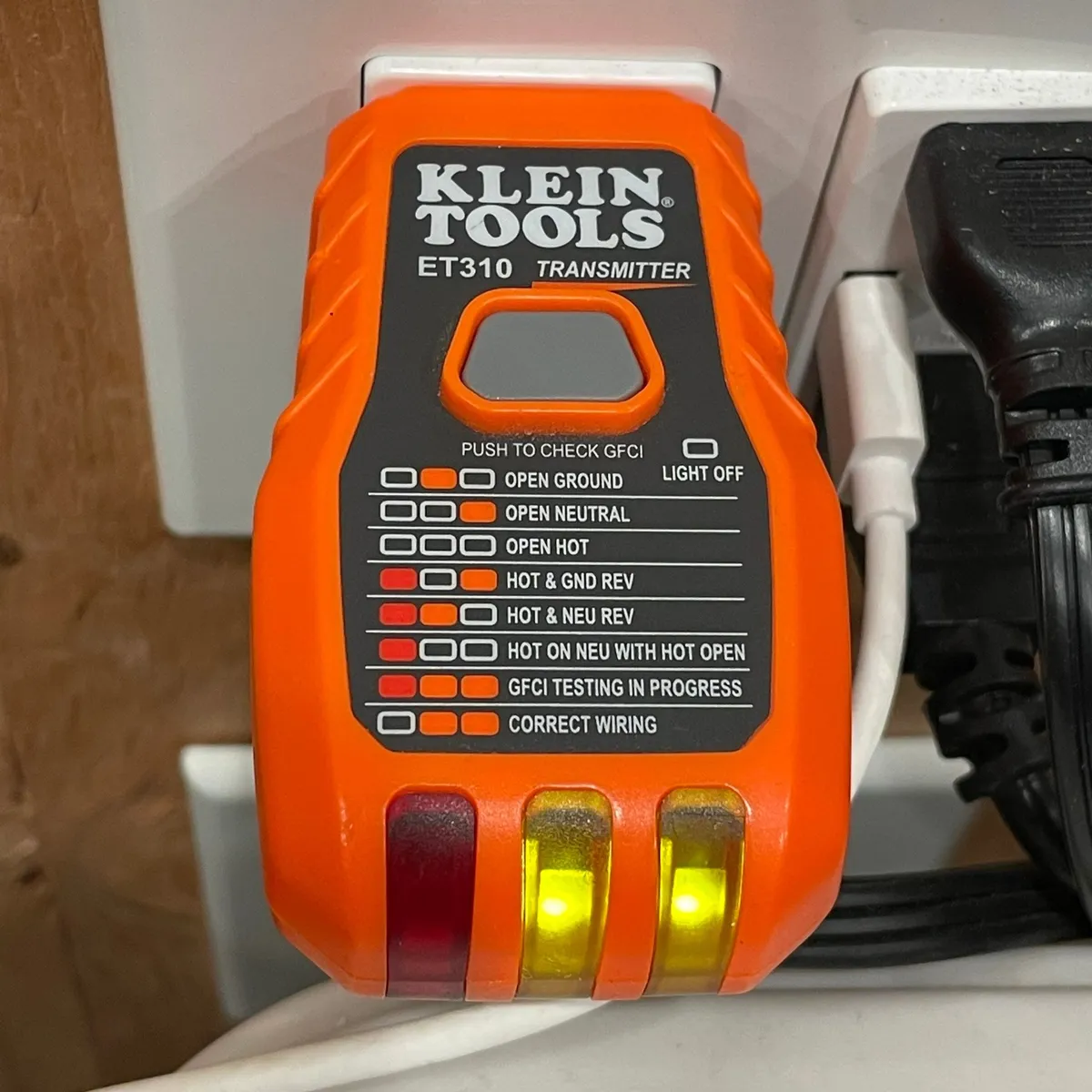
How to use an outlet tester to learn about your home's wiring
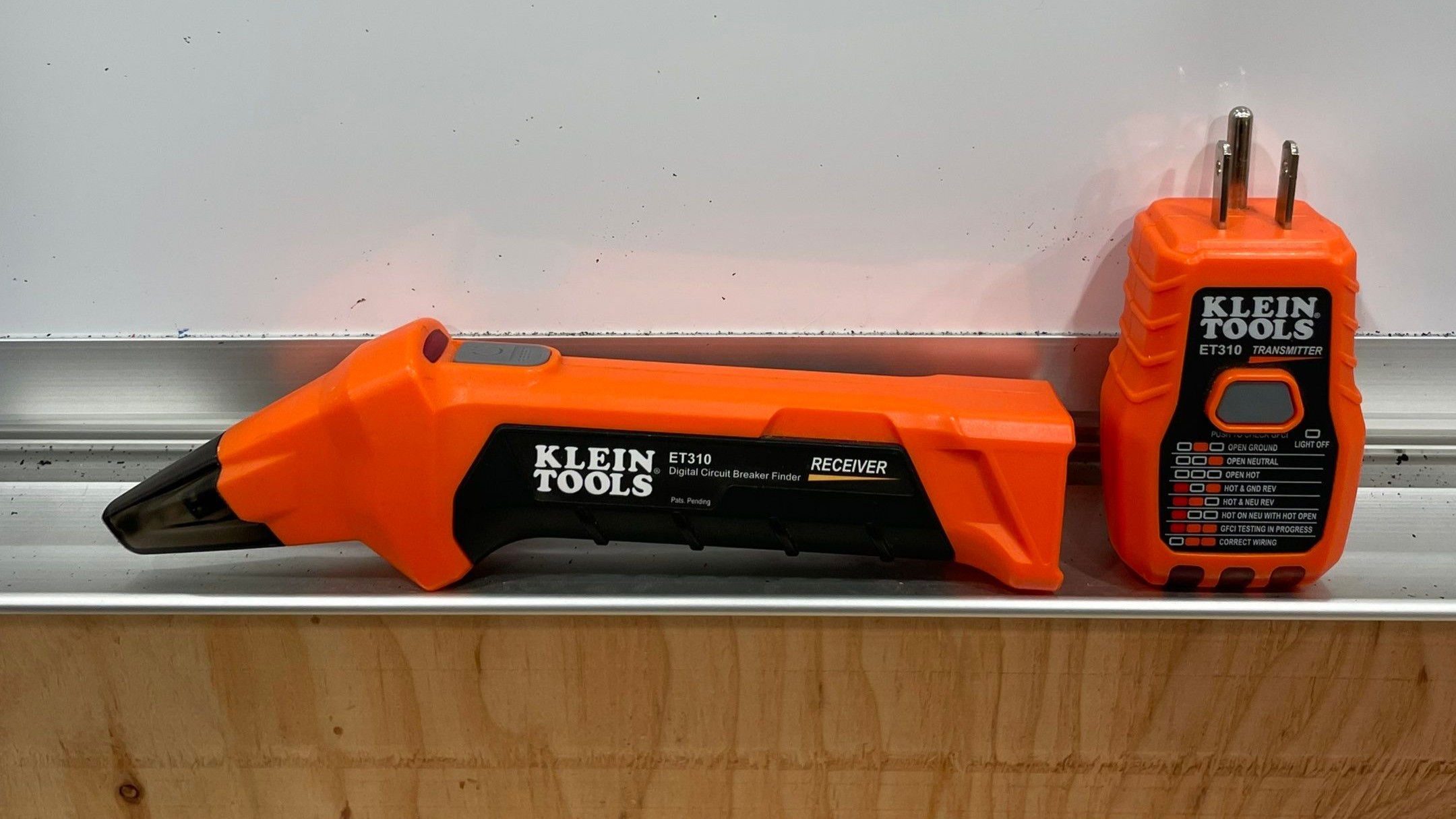
How to use an outlet tester to learn about your home's wiring
I keep this little orange tool in my back pocket for consultations and electrical safety inspections around Port Angeles and Sequim. It takes seconds to use, and it often starts a useful conversation about the wiring behind the wall.
It's a plug-in outlet tester with three lights. When you plug it into a standard three-prong, 120-volt receptacle, the lights display a pattern. A chart on the tester tells you what that pattern may mean: normal polarity, a missing ground connection, reversed hot and neutral, or another common wiring problem. A homeowner can use it to do a little sleuthing before calling us; we use it for a fast first look in most residential situations.
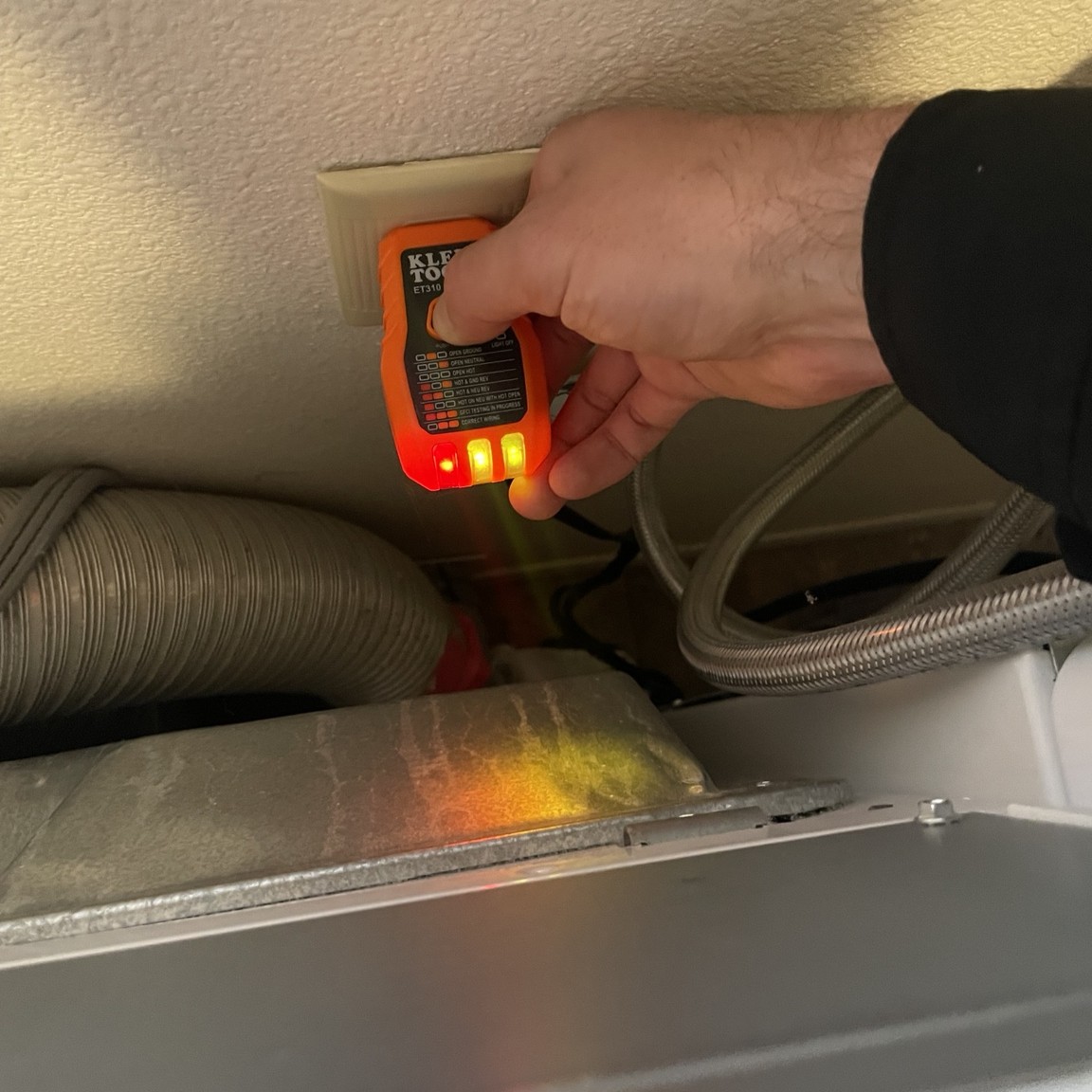
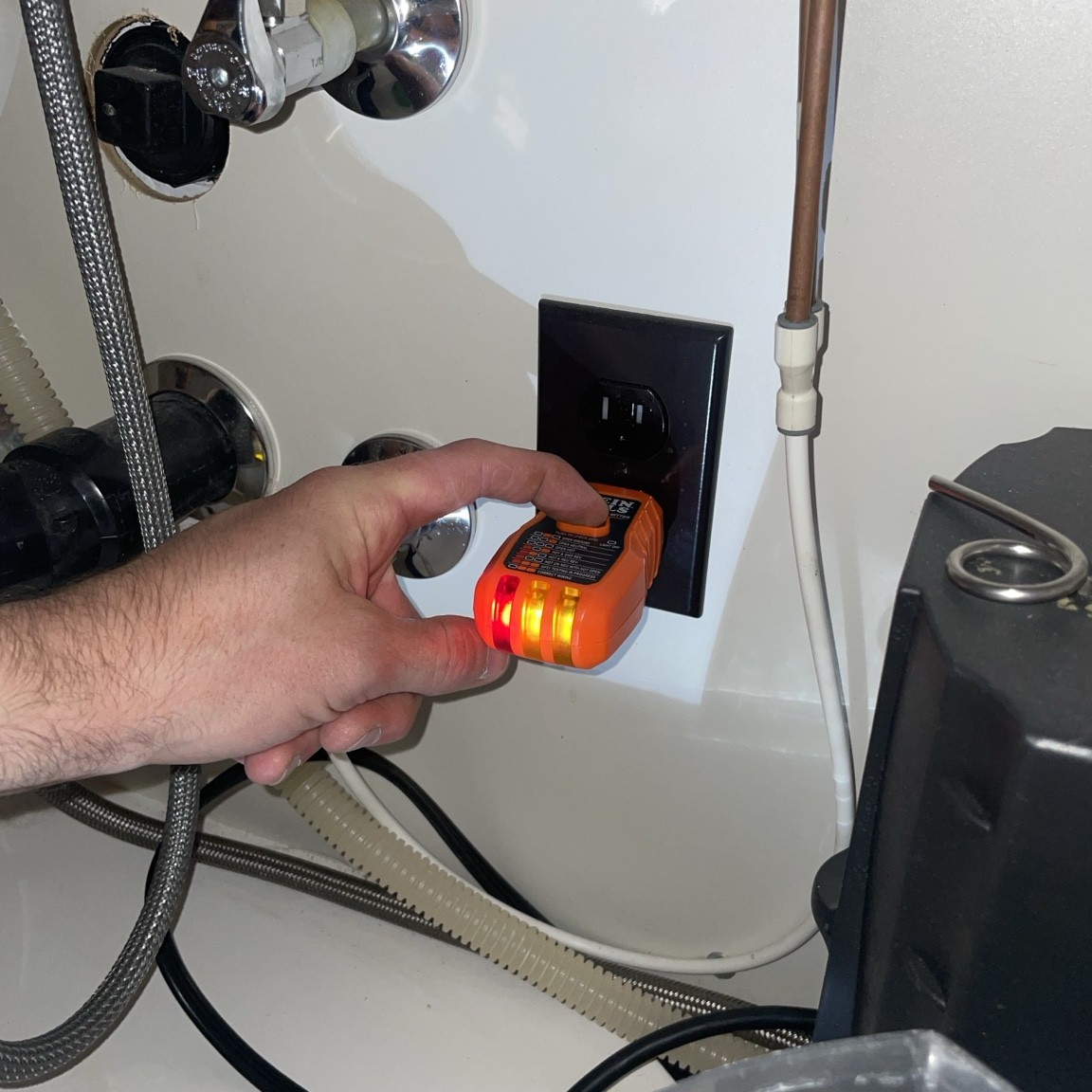
The photos in this article came from one house. We found a desk outlet that gave the tester's normal indication, a garage outlet showing an apparent open ground, other garage outlets with reversed-polarity indications, and an especially concerning pattern labeled “hot and ground reverse.” We also tested a laundry outlet and the kitchen disposal outlet for GFCI protection.
One house. Several different stories at the outlets.
What do the three lights actually tell you?
These patterns give you useful answers quickly. A homeowner can check outlets around the house, note which ones show a different pattern, and give an electrician a much clearer starting point. The chart printed on this Klein ET310 has eight labeled patterns:
Tester label | What it tells you to do |
|---|---|
Open ground | The tester cannot detect the grounding path it expects. Note the outlet and have the cause checked. |
Open neutral | The neutral path appears interrupted. Stop using the outlet and have it checked. |
Open hot | The tester sees no usable power at the outlet. The circuit could be switched off or tripped, or there could be a wiring problem. |
Hot & ground reverse | A serious warning pattern. Stop using the outlet and have an electrician identify the actual fault. |
Hot & neutral reverse | A reversed-polarity indication. The outlet may still power something; have the wiring checked. |
Hot on neutral with hot open | An unusual fault indication suggesting voltage where the tester expects neutral and an interrupted hot path. Have an electrician investigate; the light pattern alone does not identify the precise cause. |
GFCI testing in progress | The GFCI test button is being pressed. Watch for the outlet to lose power to determine whether protection tripped. |
Correct wiring | The receptacle matches the normal pattern this tester can detect. It's a useful check, not an inspection of everything behind the outlet. |
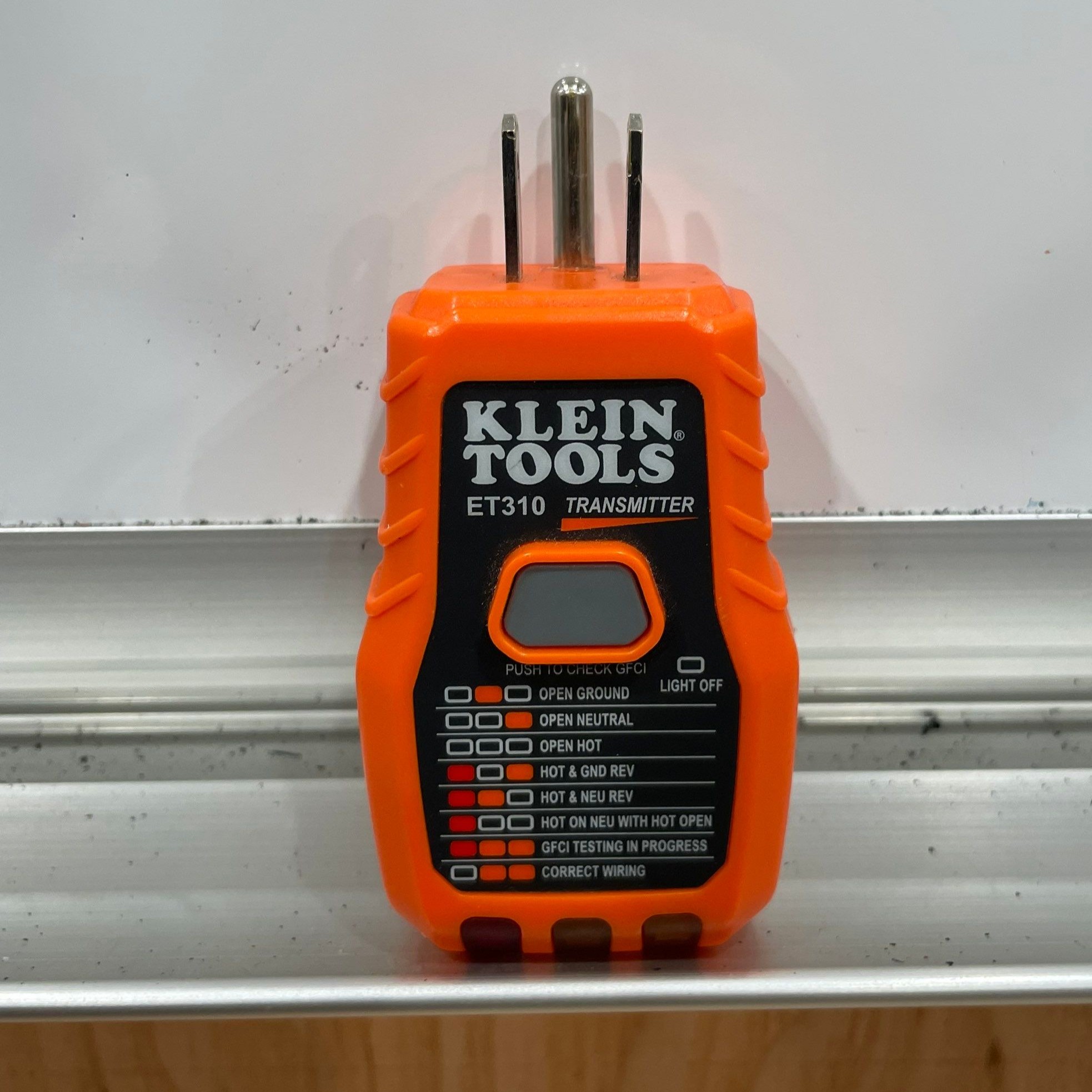
The three physical lamps are red, amber, and amber, but the combination matters. Compare the illuminated lamps to the chart on your own model, since testers may use different arrangements. The photo of our transmitter shows the full chart. We photographed some patterns from this house; the other rows explain what the tool can indicate and are not findings from this home.
An open ground indication means the tester cannot detect the expected grounding path at that receptacle. A three-prong face alone does not prove there is an equipment ground. If you see this result, have an electrician find out what is happening before relying on the outlet for equipment that needs a ground.
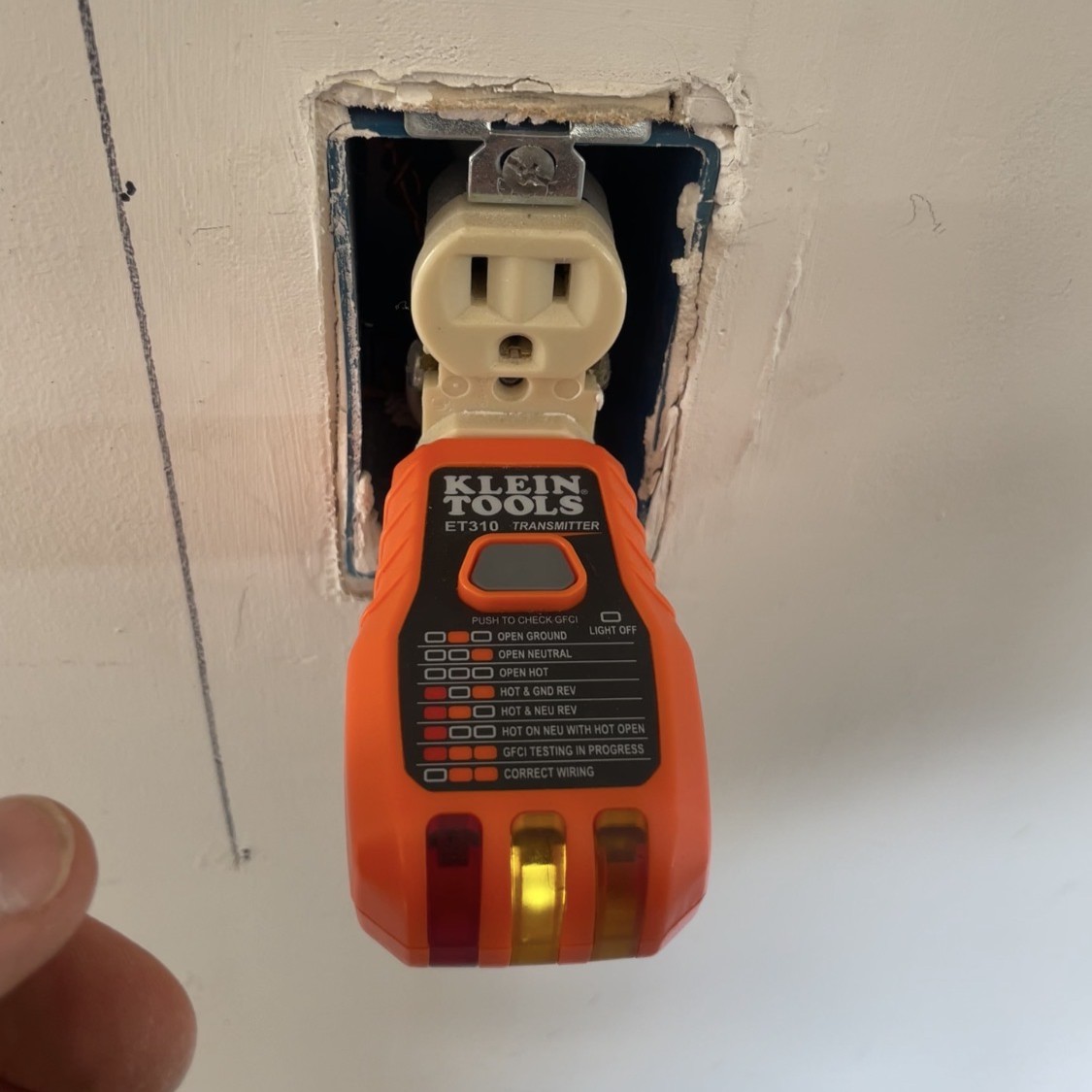
A hot and neutral reverse indication points to reversed polarity. The receptacle may still power a device, but the hot and neutral are not where they should be. It deserves investigation and correction.
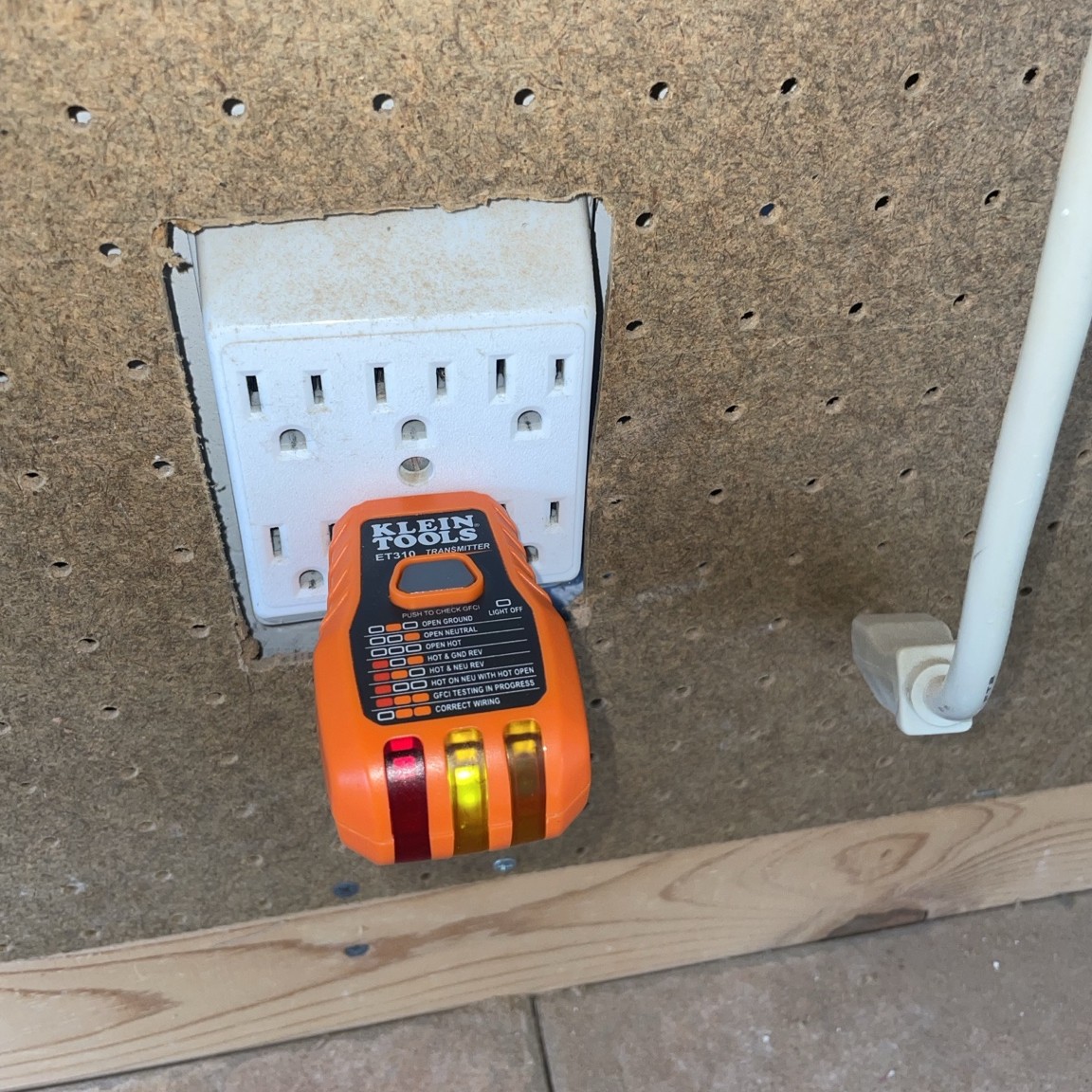
The label “hot and ground reverse” deserves particular care. That's what the tester's light pattern indicates in one of these photos. It is a warning to stop using that outlet and have the circuit diagnosed. A three-light tester cannot establish from that pattern alone that the ground conductor is energized or identify the exact fault. We use additional checks to determine what's actually wrong.
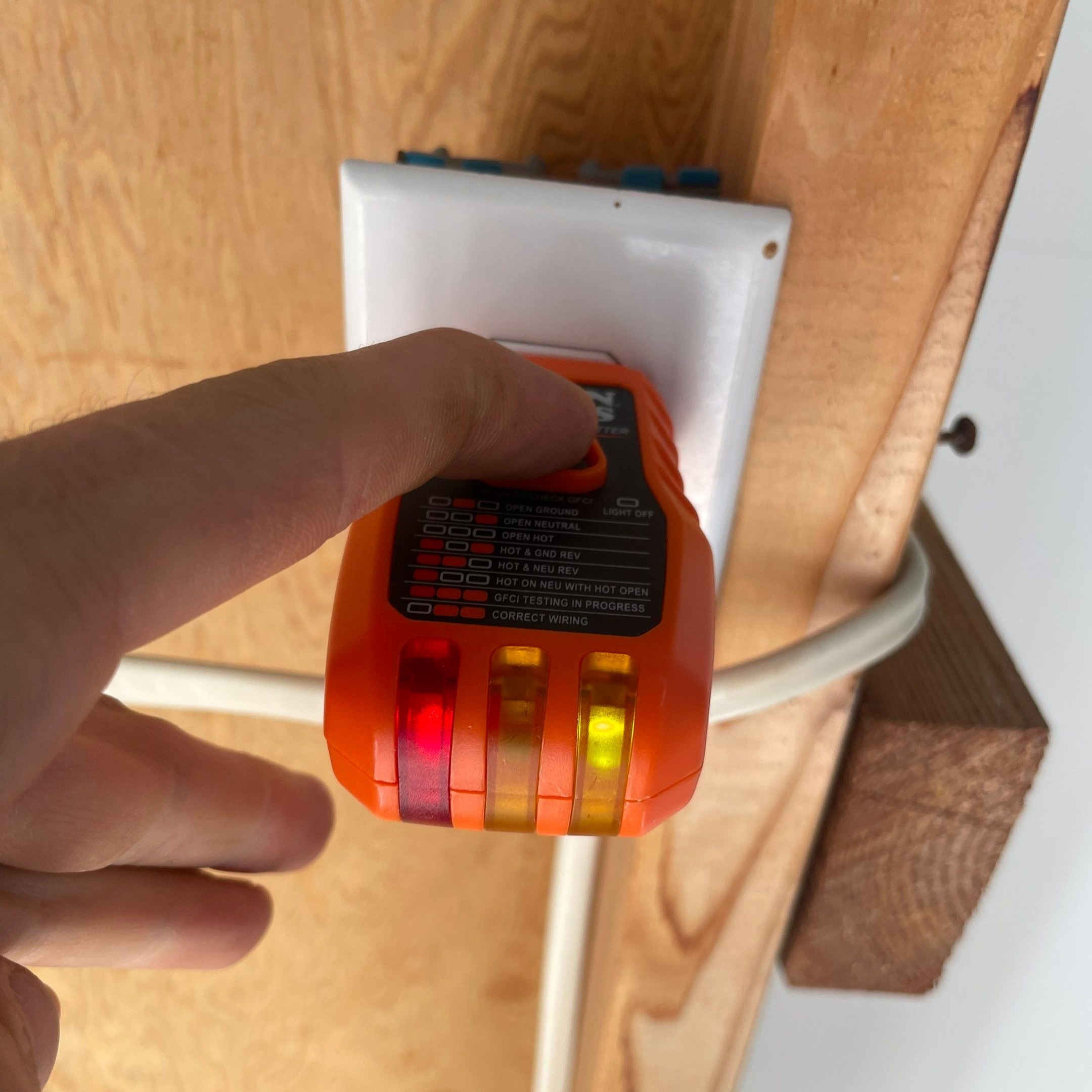
A simple walk-through for your own home
First, read the directions for your particular tester and try it on a known working, correctly wired outlet. Then plug it into each accessible three-prong outlet you want to check. Write down the room, the outlet's location, and the displayed pattern. A phone photo makes it easy to share what you saw without trying to remember which garage outlet was which.
If the outlet shows the correct-wiring pattern, you can use the GFCI test button in locations where you expect that protection, following the tool's directions. Look for the outlet to lose power and identify where the reset is. An ordinary-looking outlet may be protected by an upstream device or a panel breaker. If a test does not trip, note it for an electrician. Do not keep using an outlet that gives a concerning fault indication just to finish your list.
For panel mapping, leave the transmitter in a correctly wired outlet and use the receiver to scan the breakers with the panel cover in place, following the tool's directions. Confirm the candidate breaker at the outlet before writing it on your panel schedule. Repeat for other rooms. The receiver speeds up the search, especially when the existing labels are vague, but its indication is a starting point for verification.
The button checks for GFCI protection
GFCI protection is intended to reduce the risk of electric shock when current takes an unintended path. You commonly encounter it in kitchens, bathrooms, garages, laundry areas, outdoors, and other locations where the electrical code calls for it. The protection can come from a receptacle with TEST and RESET buttons, an upstream GFCI receptacle, or a GFCI breaker in the panel. An ordinary-looking outlet may already be protected.
On this tester, pressing the GFCI test button creates a test condition. If the protected device trips, power at the tested outlet goes off. At this house, we pressed the button at the laundry outlet and the kitchen disposal outlet under the sink, and neither tripped. That gave us a specific finding to discuss with the homeowner and investigate. The photos catch moments with the button pressed; their illuminated lights are not, by themselves, how we determined the outcome. I sometimes press the button while photographing the tester because it makes the lights show up more clearly.
The manufacturer's instructions say to check the tester on a known good receptacle first and to avoid running the GFCI test when it already indicates incorrect wiring. GFCI requirements also depend on the location, the work performed, and the applicable code at the time, so an older installation needs a proper assessment before you declare it compliant or noncompliant.
The other half helps find the right breaker
The plug-in piece is also a transmitter. A handheld receiver scans the electrical panel to help identify which breaker feeds the outlet. The accompanying raw video shows me sweeping the receiver across breakers until it identifies one; the panel cover is removed because I was working there as an electrician. You do not need to remove the cover to use the breaker finder at home. That can save a lot of yelling across the house:
“No!”
“No!”
“That's it! Wait, that was it!”
“Not the other one. Go back!”
Not ideal when the baby's asleep.
If your panel labels are vague or missing, tracing circuits and making a clear, printed panel schedule can be an excellent small project. The receiver is a locator, though, not final proof that a circuit is off. Verify at the outlet before relying on a label. Follow the tester instructions and leave the panel interior to a qualified person.
Is one worth owning?
For many homeowners, yes. Basic three-light receptacle testers can be inexpensive; the pictured Klein Tools ET310 adds the GFCI test and breaker-finding receiver and is listed around $50 by several retailers as of this writing. Check current availability locally at Platt in Port Angeles or Home Depot in Sequim.
Use it to learn about your home, list the outlets with unusual readings, and improve your panel labels. That bit of homework can save time explaining the issue and help us focus our visit. If it gives an unusual reading, a GFCI won't trip, an outlet is loose or damaged, or you feel a shock, stop using that outlet and have a qualified electrician investigate.
At Sound Electrical Contractors, this is one of the quick tools we bring into consultations and electrical safety inspections in Port Angeles, Sequim, and around Clallam County. A few minutes of testing often helps us decide where to look more closely and what to explain to the homeowner.
